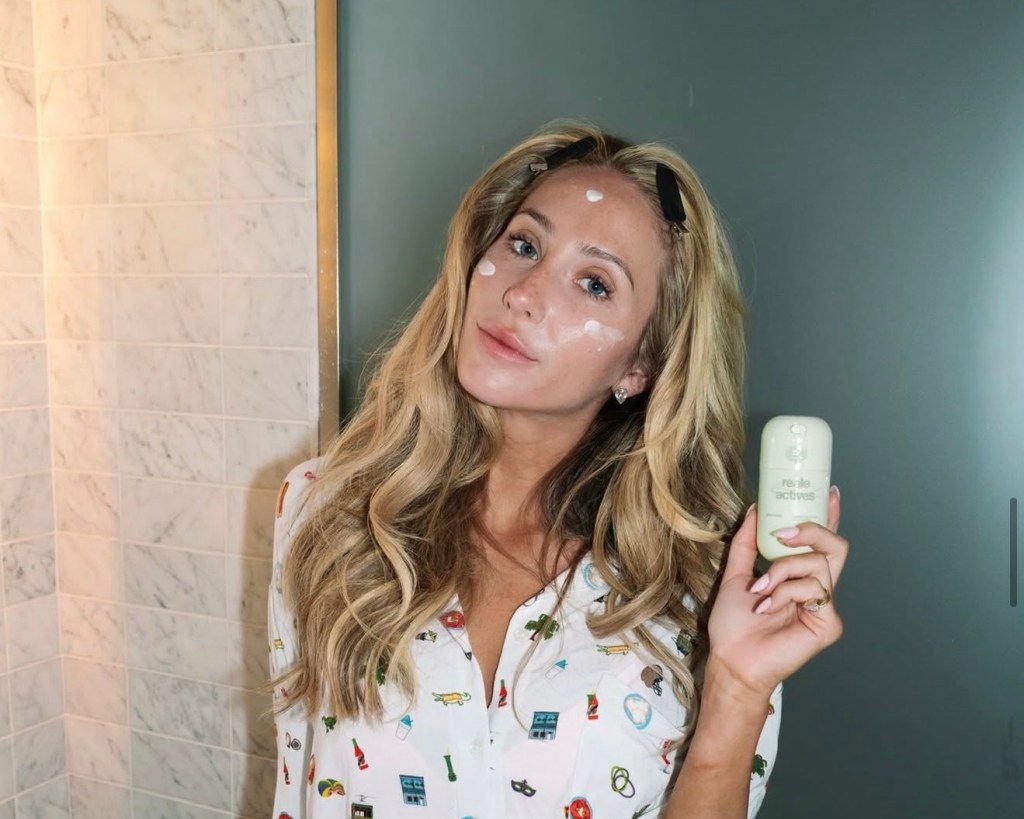
There is something strangely comforting about watching a woman who seemingly has everything together admit that she does not, in fact, have everything together. For years, pop culture gave us women who appeared impossibly polished: perfect hair, perfect houses, perfect relationships and careers that seemed to unfold according to some invisible five-year plan. We have been taught to admire the woman who makes everything look effortless, even when we know perfectly well that looking effortless usually requires an extraordinary amount of effort.
Then came Alix Earle, armed with a phone, a GRWM and a willingness to let millions of people watch her figure things out in real time. Now, with Earle Meets World, that distinctly internet-born form of fame has made its way onto Netflix, bringing with it a very different kind of reality television. It has the glamour, family dynamics and larger-than-life quality of the Kardashian era, but it belongs to a generation that grew up knowing that behind every perfect photograph is a person who probably took twenty-seven attempts to get it right.

That is what makes Alix’s rise to reality television so interesting. The Kardashian generation was introduced to fame through television and then invited into the celebrities’ lives; Alix’s generation experienced it the other way around. Her audience knew her through the small, seemingly insignificant moments first: getting ready, talking to the camera, going out, coming home, oversharing and occasionally making a decision that probably seemed more sensible before it was posted online.
By the time she arrived on a television screen, she was not an entirely unknown celebrity inviting us into her world. She was someone whose audience already felt as though they had been there. The medium changed, but the intimacy remained.
Perhaps that is why the comparison to the Kardashians feels both obvious and slightly incomplete. There is still the enormous house, the glamorous wardrobe, the family, the relationships and the carefully produced reality-show world. But the fantasy has changed. The Kardashian era helped establish the idea that watching an extraordinarily glamorous woman live an extraordinarily glamorous life could itself be entertainment.

Alix represents a generation that has become just as interested in what happens when the glamour slips. We have spent years watching people document their lives from bedrooms and bathrooms, seeing the bad skin days, the awkward conversations, the questionable outfits and the mornings when getting out of bed is the day’s greatest achievement. We have become accustomed to seeing the person behind the image, and now we expect the image to come with a person attached.
That shift matters because young women have spent an extraordinary amount of time being taught how to look effortless while putting in an enormous amount of effort. We are expected to be ambitious without appearing intimidating, attractive without seeming vain, confident without becoming arrogant and successful without making anyone else feel uncomfortable. Even the idea of being “put together” has become a kind of performance. Social media has only intensified it, giving us an endless stream of women who appear to have mastered their careers, relationships, wardrobes, bodies and morning routines before most of us have located our phone charger.
Alix’s appeal sits somewhere in the gap between that fantasy and reality. She can inhabit the glamorous world of celebrity while still seeming like someone who might have no idea what she is doing tomorrow. That combination is important because it allows young women to see ambition without the accompanying expectation of perfection.

You can want the big career, the beautiful clothes, the exciting life and the opportunities, while still being confused, insecure, impulsive or occasionally a complete disaster. Those things are not mutually exclusive, even if popular culture has spent years suggesting that they are.
There is also something quietly radical about allowing women to be complicated in public. Female celebrities have traditionally been asked to make themselves easily understandable. We want to know whether they are the good girl or the bad girl, the relatable one or the glamorous one, the career woman or the romantic, the role model or the cautionary tale.
The internet has made those categories even more intense because every opinion, outfit, relationship and mistake can be dissected within minutes. Alix’s particular brand of fame works because she does not always fit neatly into one version of herself. She can be aspirational and ridiculous, glamorous and chaotic, confident and unsure. There is room for contradiction.
Maybe that is why “messy” has become less of an insult and more of an oddly appealing quality. It does not mean careless or irresponsible, and it certainly does not mean that women should stop striving for things. It means accepting that a worthwhile life is rarely as neat as it looks from the outside.
There will be career decisions that turn out differently than expected, friendships that change, relationships that end, opportunities that arrive before you feel ready and moments when you realise you have absolutely no idea what you are doing. None of these things make a woman less successful. In many cases, they are evidence that she is actually living rather than simply maintaining an image.
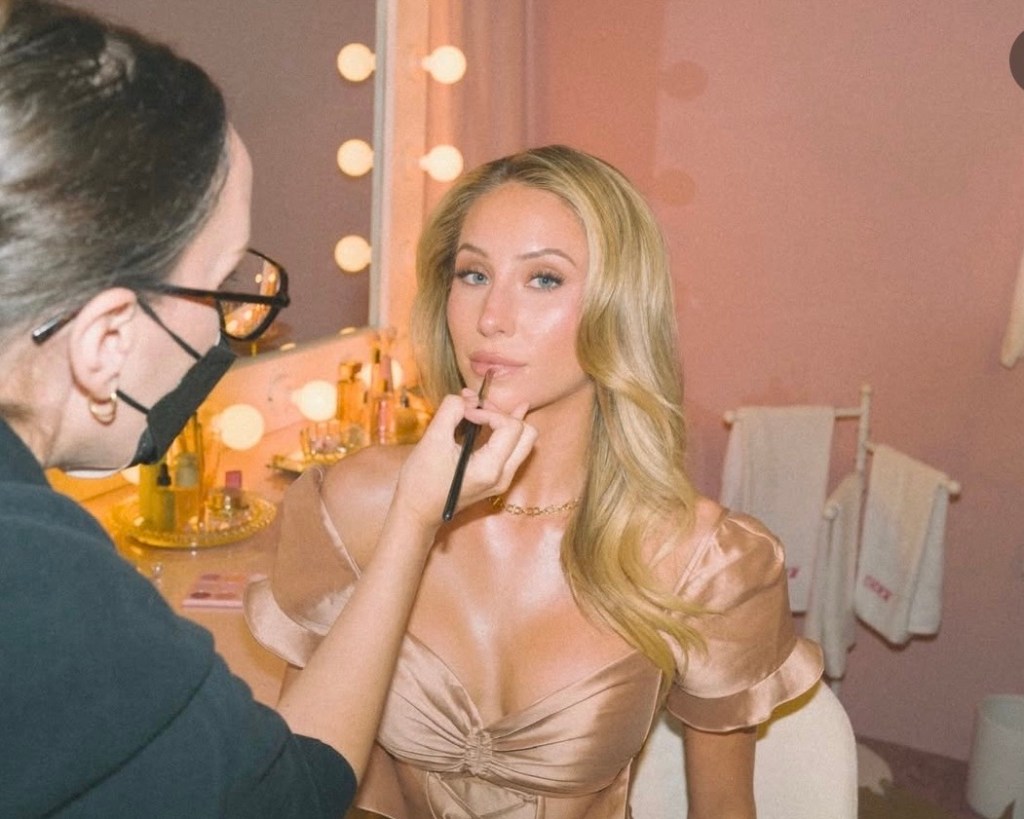
That may be the most interesting thing about the new generation of female celebrities. They have not necessarily rejected the fantasy of having it all; they have rejected the idea that having it all requires looking as though everything is always going perfectly. We still want the gorgeous clothes and the dream careers and the holidays and the beautifully decorated houses. We simply want permission to be human inside them. The aspiration is no longer necessarily to become the woman who never has a bad day. It might be to become the woman who can have one without feeling that it has ruined the entire picture.
In that sense, Earle Meets World is more than another reality show arriving on our screens. It is part of a wider change in what we find compelling about women in the public eye. The Kardashian era taught us that a woman’s life could become an entire entertainment universe. The Alix Earle era suggests that the woman inside that universe does not have to be perfectly polished for us to want to watch her. In fact, the moments when the polish disappears may be the ones we remember most.
Perhaps the future of female aspiration is not perfection at all. Perhaps it is the freedom to be ambitious, glamorous, successful, uncertain, ridiculous and completely yourself, sometimes all before lunch. There is power in being a little bit messy because it means you are no longer waiting to become a flawless version of yourself before you allow yourself to be seen. And if Alix Earle’s particular corner of pop culture tells us anything, it is that there is a whole generation of women who are more than ready to see each other exactly that way.
 ROARA Magazine