
There was a time when having nothing to do was simply part of everyday life. An afternoon could pass without a plan, a journey could be spent looking out of the window, and waiting for someone meant simply waiting.
Today, those same moments are almost impossible to leave untouched. A few seconds of silence can be enough to make us reach for our phones, open an app and find something to consume. With entertainment, communication and information available at every moment, boredom has become something we instinctively try to eliminate. But perhaps boredom was never something that needed fixing in the first place.
For a generation that has grown up surrounded by smartphones and social media, filling empty time has become almost automatic. We check our phones while the kettle boils, scroll while waiting for a friend and watch something while eating dinner. Even when there is no particular reason to look at a screen, we often do it anyway. It is less about wanting to see something and more about being accustomed to having something there.
This constant access has changed our expectations of what a quiet moment should feel like. A journey no longer has to involve looking out of the window; it can be filled with music, videos or messages. Waiting in a queue can become an opportunity to catch up on notifications. A slow Sunday afternoon can quickly turn into several hours online.
There is always another piece of content available, which means there is rarely a natural point at which the day simply becomes quiet. The result is that boredom can feel strangely uncomfortable. When there is nothing immediately demanding our attention, we are suddenly left with our own thoughts. That can be unsettling when we are used to constantly moving from one thing to another.
Yet that mental quiet has its own value. Without new information arriving every few seconds, our thoughts have the opportunity to develop on their own. Ideas can appear, memories can resurface and problems can sometimes become easier to understand.
There is a reason people often think of their best ideas while walking, showering or travelling. Those activities leave enough space for the mind to wander without requiring complete concentration. Boredom can create a similar environment.
Instead of reacting to what is placed in front of us, we begin deciding what we want to think about ourselves. It is a small but important shift from consuming to creating.
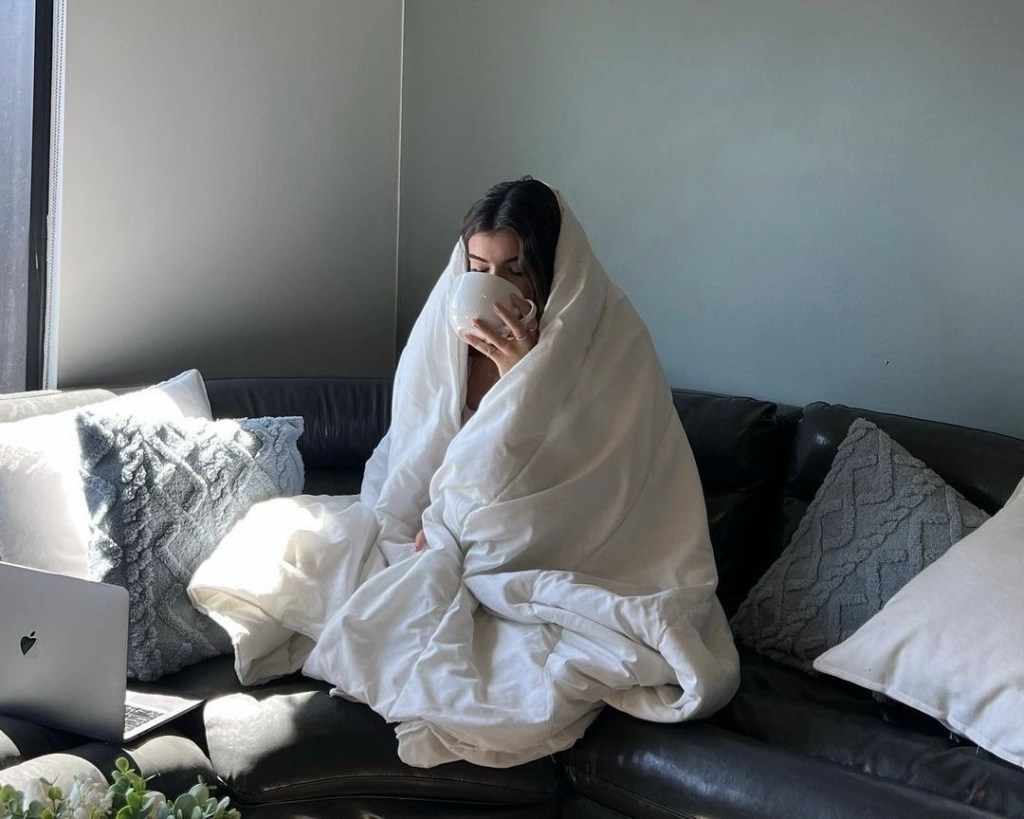
The problem is that modern life doesn’t always encourage that kind of pause. There is considerable pressure to make our time useful. We are encouraged to exercise, learn, work, plan, achieve and improve ourselves, often all at once. Even our free time can become structured around becoming a better version of ourselves.
There is nothing wrong with ambition, but constantly measuring the value of a moment by what it produces leaves very little room for simply enjoying being alive.
Some of the most enjoyable memories don’t have an obvious purpose. They might be an evening spent sitting around a friend’s kitchen, a walk through town that went on longer than expected or an afternoon during the summer when nobody had decided what they were going to do.
These experiences are memorable precisely because they weren’t carefully organised. There was enough freedom for something unexpected to happen.
That freedom is becoming harder to find when every moment can be documented. Social media has made it possible to turn almost any experience into something to photograph, post or share, but sometimes the pressure to record a moment can take attention away from actually experiencing it.
A sunset becomes something to capture rather than simply something to watch. A concert becomes something to film. A holiday becomes a collection of photographs waiting to be uploaded.
There is nothing wrong with wanting to remember the things we love. Photographs can be wonderful, and sharing experiences is part of how people connect. The issue is whether we feel that an experience is somehow incomplete unless it has been recorded.
Not everything needs an audience, and not every enjoyable moment needs to become part of a digital archive.
Perhaps the answer isn’t to reject technology, but to become more deliberate about when we use it. A train journey without headphones, a coffee without a phone on the table or a walk without anything playing in the background can seem insignificant, but these small decisions create room for observation.
You might notice the architecture of a street you’ve walked down hundreds of times, overhear a funny conversation, recognise how much the season has changed or simply enjoy being somewhere without needing to do anything about it.
There is also something freeing about accepting that some days will be unremarkable. Not every weekend needs to be packed with plans, and not every evening needs to end with a memorable story. Life contains plenty of ordinary hours, and those hours are not somehow less valuable because nothing exciting happened. A quiet day can still be a good day.
Boredom, then, isn’t necessarily about having too little to do. It can be the point at which we stop being directed by everything around us and decide for ourselves where our attention should go.
It can lead to creativity, reflection or simply a much-needed break from the constant stream of information.
Perhaps we’ve been looking at boredom from the wrong perspective. Instead of treating it as an empty space that needs to be filled, we could see it as time that belongs entirely to us.
No notifications need answering. No trend needs following. Nothing needs to be achieved. For a few minutes, there is nowhere else to be.
In a world that has become exceptionally good at demanding our attention, that might be worth protecting. Not every moment needs to entertain us, teach us something or become a memory worth sharing.
Some moments can simply pass quietly, unnoticed by anyone else.
And perhaps learning to be comfortable with that isn’t a step backwards at all. It might be one of the simplest ways of making sure that, amongst everything competing for our attention, we don’t lose our attention to our own lives.

