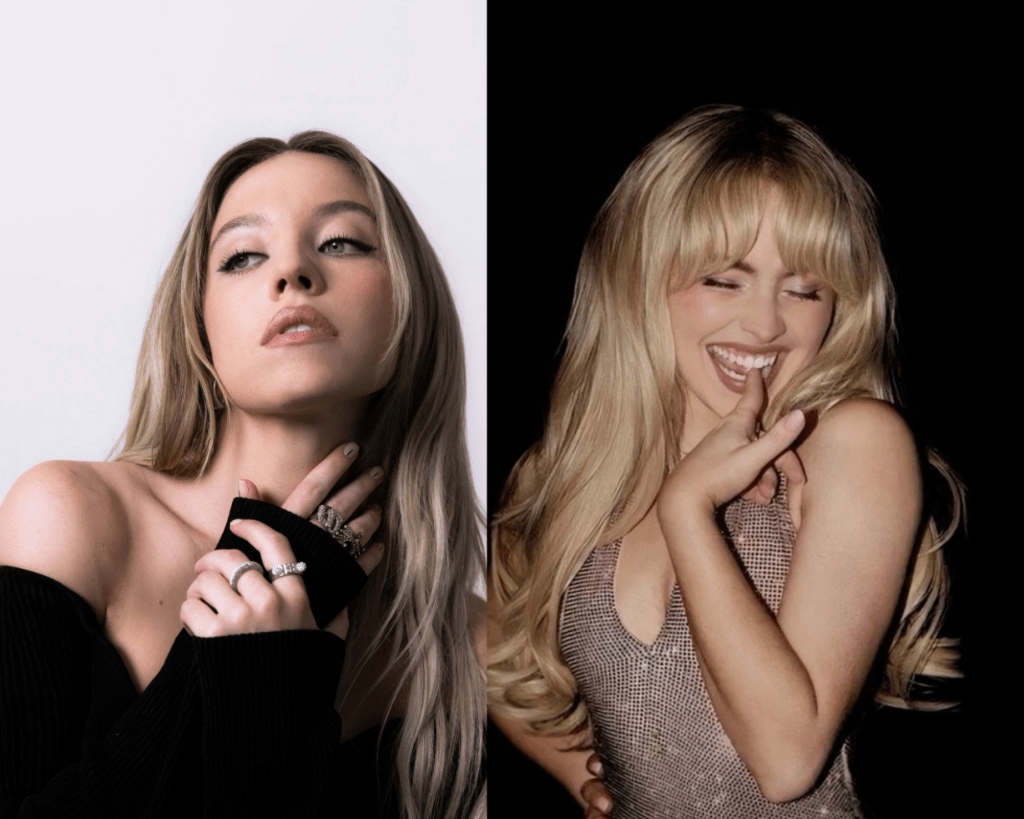
In the entertainment world, image has always been a powerful tool. But when it’s the artists themselves who take control of how they present it — with intention, irony, or the desire to reclaim past narratives — the reactions are still split. Especially when that image leans into sensuality.
Recent conversations sparked by Sydney Sweeney and Sabrina Carpenter are perfect examples. Both are young, talented women on the rise. Both have taken center stage with campaigns and releases that stirred controversy — not for what they showed, but for what they represented: a woman confident in her body, her success, and her decision to play with the codes of public femininity.
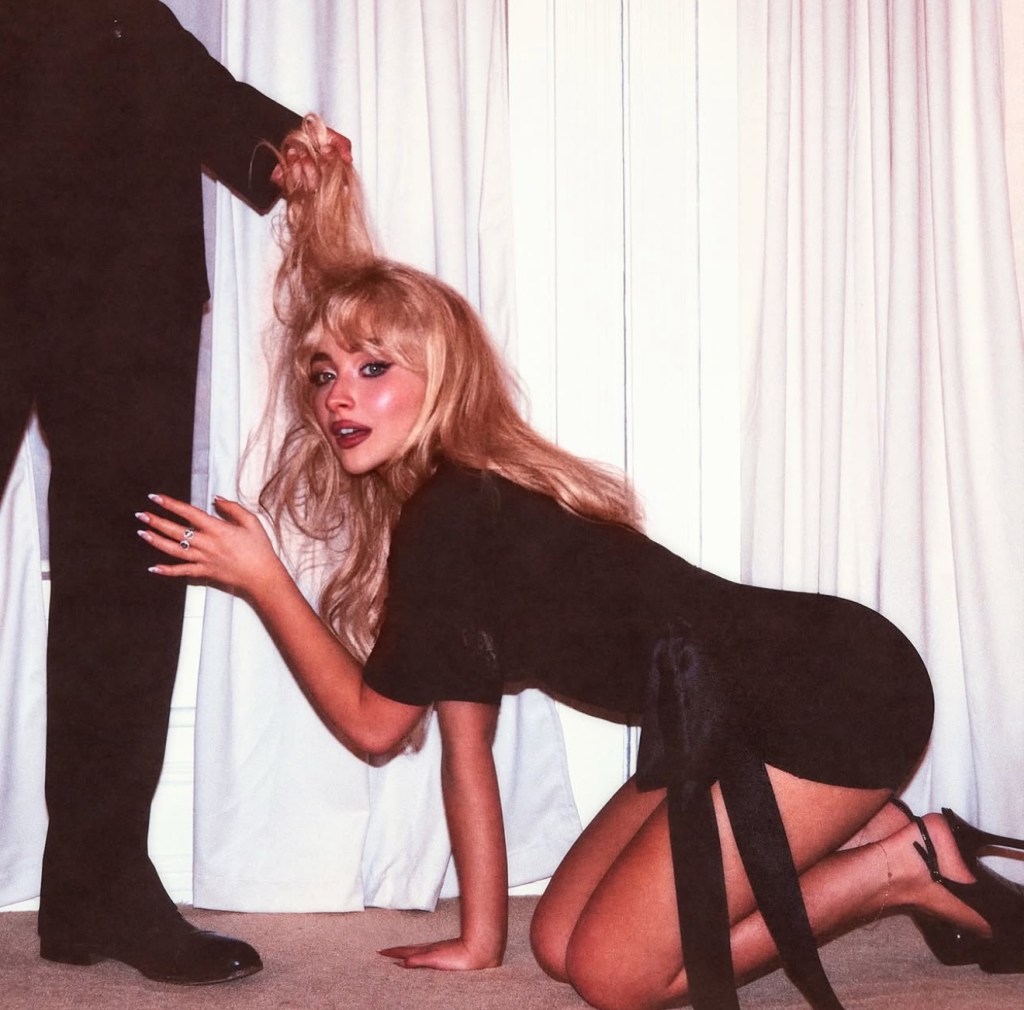
Sabrina, in particular, has become one of pop’s most talked-about figures. Her hit Espresso signaled a bold new chapter — more daring, more ironic, more self-aware. And now, with the cover of her upcoming album (out August 29), she’s ignited debate once again. In the image, she poses seductively, clinging to the trousers of a faceless man. But it’s not about him — it’s about her gaze, her control, her aesthetic power. There’s no submission here. It’s playfulness, intention, and full agency.
Sydney Sweeney’s American Eagle campaign received similar attention. Her presence makes an impact. While some praised her authenticity and sex appeal, others criticized her for “feeding into stereotypes.” But this duality says more about us than it does about her. When a woman owns her image and makes it part of her narrative, society doesn’t stop judging — it just repackages its discomfort as opinion.

And why is that? Because we still have a complicated relationship with female sensuality, especially when it’s self-driven. When a woman chooses to look sexy on her terms — not as a product crafted by a label, but as the author of her story — she’s met with suspicion. As if claiming power through aesthetics somehow invalidates her talent or depth.
From my perspective, these artistic choices are far from shallow. They’re part of an artist’s personal and creative journey. They show us that a woman can be talented, provocative, and multifaceted all at once. She doesn’t have to apologize for evolving, for expressing herself, or for experimenting with her image. In fact, she might discover sides of herself she never knew were there.
What truly unsettles people isn’t the dress, the pose, or the lipstick. What unsettles them is the freedom. The freedom to try something new, to take risks, to blend art and commerce without losing one’s voice. In a world that demands women to always make sense, these figures remind us that we, too, are allowed to contradict ourselves, to be bold, to change our minds.
So maybe the real question isn’t whether these women are being “too much,” but rather: why are we still uncomfortable seeing women who are unapologetically in control?
Artists like Sabrina and Sydney are rewriting the rules. They’re embracing every version of themselves — even the provocative ones — without shame. And that’s not just powerful. That’s revolutionary.
After all, real empowerment doesn’t always come with soft edges. Sometimes it’s messy. Sometimes it stirs backlash. But that’s where its strength lies: in showing the world what was never meant to stay hidden.
 ROARA Magazine