
Since the beginning of pop music, the concept of the Pop Girl has been a defining force in the industry. More than just an industry creation, the Pop Girl has captivated audiences with her style, persona and influence on culture. This archetype has evolved with each generation, reflecting the changing social and cultural landscape. From the pop divas of the ’90s and 2000s like Britney Spears, Christina Aguilera and Beyoncé to today’s stars such as Billie Eilish, Olivia Rodrigo and Tate McRae, the Pop Girl remains central to both music and popular culture.
During the late ’90s and early 2000s, the Pop Girl was seen as a carefully crafted product of the industry: a young, talented performer with a commercially appealing image, elaborate choreography and infectious hits. Britney Spears epitomized this figure with her 1999 debut, followed by artists like Christina Aguilera, Jessica Simpson and Mandy Moore. However, as these artists sought to take creative control of their music, many faced challenges breaking free from industry expectations. Beyoncé, for example, transitioned from Destiny’s Child to a solo career where she took control of her artistry, setting the stage for future pop stars to do the same.
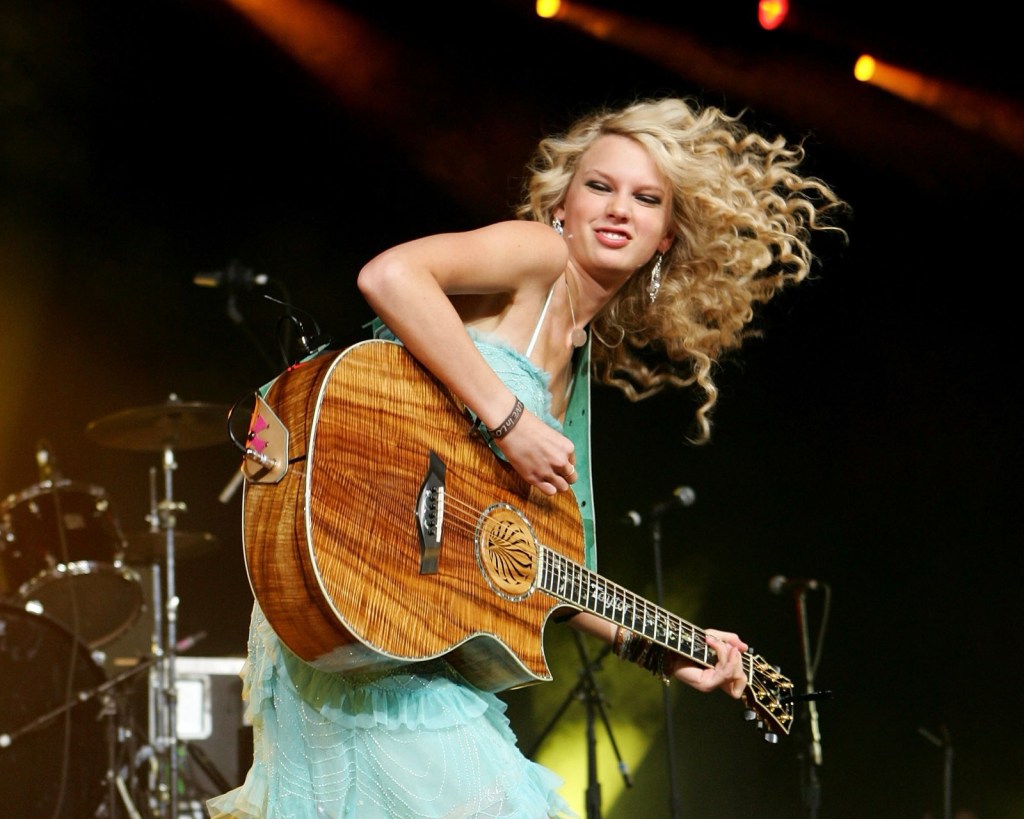
As the 2010s emerged, the Pop Girl began to redefine herself, moving beyond the industry’s traditional expectations. Artists such as Lady Gaga, Taylor Swift and Lana Del Rey pushed boundaries with their unique artistic visions. Lady Gaga challenged conventional pop with her avant-garde visuals and theatrical performances. Taylor Swift’s transition from country to pop and later to indie-folk demonstrated her ability to reinvent herself while maintaining a strong fanbase. Lana Del Rey introduced a cinematic, melancholic aesthetic that defied mainstream pop’s typical energy, influencing a new wave of artists.
Today, the Pop Girl has evolved to encompass a variety of styles and narratives. Billie Eilish, for example, has established herself as a pop icon with a dark, unconventional aesthetic and introspective lyrics, rejecting the industry’s traditional pop mold. Olivia Rodrigo and Tate McRae have achieved similar success, blending nostalgic pop influences with raw, personal storytelling that resonates with a new generation. However, many of these artists draw inspiration from the pop divas of the ’90s and 2000s, reinterpreting their sounds, styles, and narratives for today’s audience. This cycle of influence demonstrates that the Pop Girl is not a static concept but a constantly evolving force adapting to new trends and audience expectations.

Social media and streaming platforms have played a crucial role in shaping the modern Pop Girl. Unlike their predecessors, today’s artists have more freedom to define their own identities and connect with audiences directly without relying entirely on major record labels. Platforms like TikTok, Instagram, and YouTube allow them to engage with fans in real-time, experiment with their sound, and shape their public image on their own terms. This democratization of pop music has led to a more diverse landscape where emerging artists can break into the industry without conforming to a specific mold.
The future of the Pop Girl remains dynamic, shaped by digital platforms and evolving audience expectations. With greater creative autonomy and direct fan engagement, the next generation of pop stars will likely continue to challenge industry norms while embracing the legacy of those who came before them. As music and pop culture continue to change, one thing remains certain: the Pop Girl will always be a powerful force, reflecting and shaping the trends of each new era. More than just a label, she represents the ever-changing relationship between music, identity and cultural expression.
 ROARA Magazine