Rewind back to 5 years ago, the use of the word ‘stan’ was none existent. Nowadays, it is a lot more commonly used, as well as accepted. If you were a big fan of a band or artist you were labelled a ‘crazy fan girl,’ an adjective that was not positively used by most.
Stan culture has somewhat always been a thing, but comparing how fans of the Spice Girls showed their love and support vs. fans of Little Mix are two completely different things. Social media has made it a lot easier to show support directly to that artist. You can write a nice tweet to/about them or make them an edit on instagram. Along with it being easier to show love it’s also easier and a lot more common to make friends, even best friends through that mutual love.

Stan culture is not only beneficial for the artist, but also their team. Labels often find themselves going directly to stans to get ideas in order to further their clients career. A popular and frequently used idea that came directly from stans was a ‘streaming party’. You create a playlist entirely of one artist’s songs or one certain album & then you plan a time for everyone to click play at once. This generates more streams which equals more sales. The music industry would be nothing without stan culture and the dedication each stan has towards their favourite artist(s).
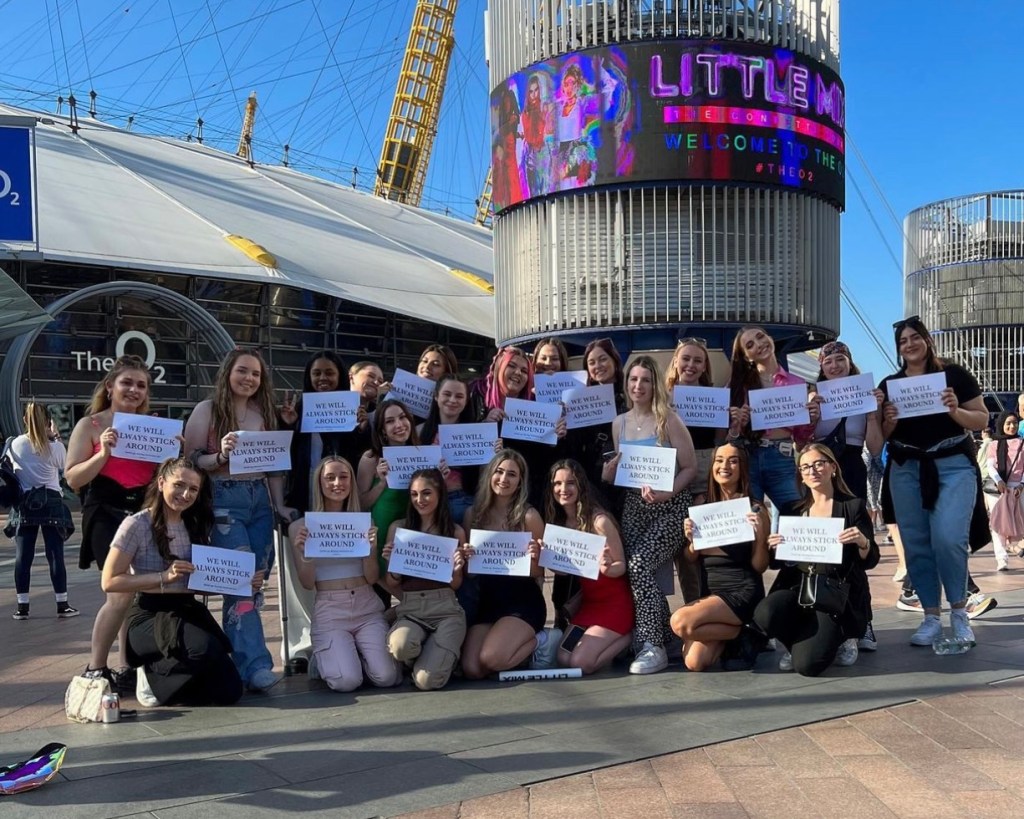
Unfortunately, with the good comes the bad. However in these times it is easier to connect with not only fellow stans but the artist themselves. Social media is a whole new world, with the good comes the bad and many stans often find themselves the target of trolling and bullying. Many trolls hide behind fake and anonymous accounts and will ruthlessly attack those for having opinions – whether it be a controversial opinion, or just because they want to pick a fight.
Sadly, the new world of stanning an artist impacts not only the stans but also the artist. Many of these artists find themselves reaching for their phones less and less thus decreasing their interaction with their fans. Nowadays, social media interaction is crucial to an artist’s career. Usually an artist will have their team post for them, making each post less and less personal. This can sometimes drive a wall between the artist and their fans, sadly meaning they lose fans.
Despite the fact that I cannot speak directly on stan culture when it first started, life seemed a lot more chilled. Although mass hysteria was still expected around big artists at the time, there were no phones, or at least no phones with cameras. Meaning fans lived more in the moment. There were no cyber attacks or bullying as all interactions and friendships were made face to face, opposed to online.
Stan culture has come on massive leaps and bounds over the years. I don’t believe it ever has been perfect, nor will ever be. The world is full of people who will never understand stan culture, but as long as it’s what makes people happy, who really cares? And as I mentioned before, stan culture is what drives the music industry & society should start respecting it as such.
 ROARA Magazine